
There is something about buying a completed property that feels reassuring.
You can walk through it. You can touch the finishes. You can see the kitchen, the bedrooms, the view and the neighbourhood around it.
But real estate investing is not always about buying what is already finished.
Sometimes, the opportunity is in buying before completion.
This is one of the reasons I find off-plan real estate particularly interesting.
And it is also a concept I was introduced to some time ago by my good friend and mentor, Sir OJ Wada.
Sir OJ is a lawyer and serial entrepreneur, founder of Solohan & Co and the Solohan Foundation. He was inducted as an Ambassador by the AU Agenda 2063 Ambassadorial Assembly in July 2024. Read the report →
One of the ideas he shared with me that stayed with me was the importance of understanding how value can be created between the point at which you enter an investment and the point at which it is completed.
That led me to think more deeply about off-plan property.
What Exactly Is Off-Plan Property?
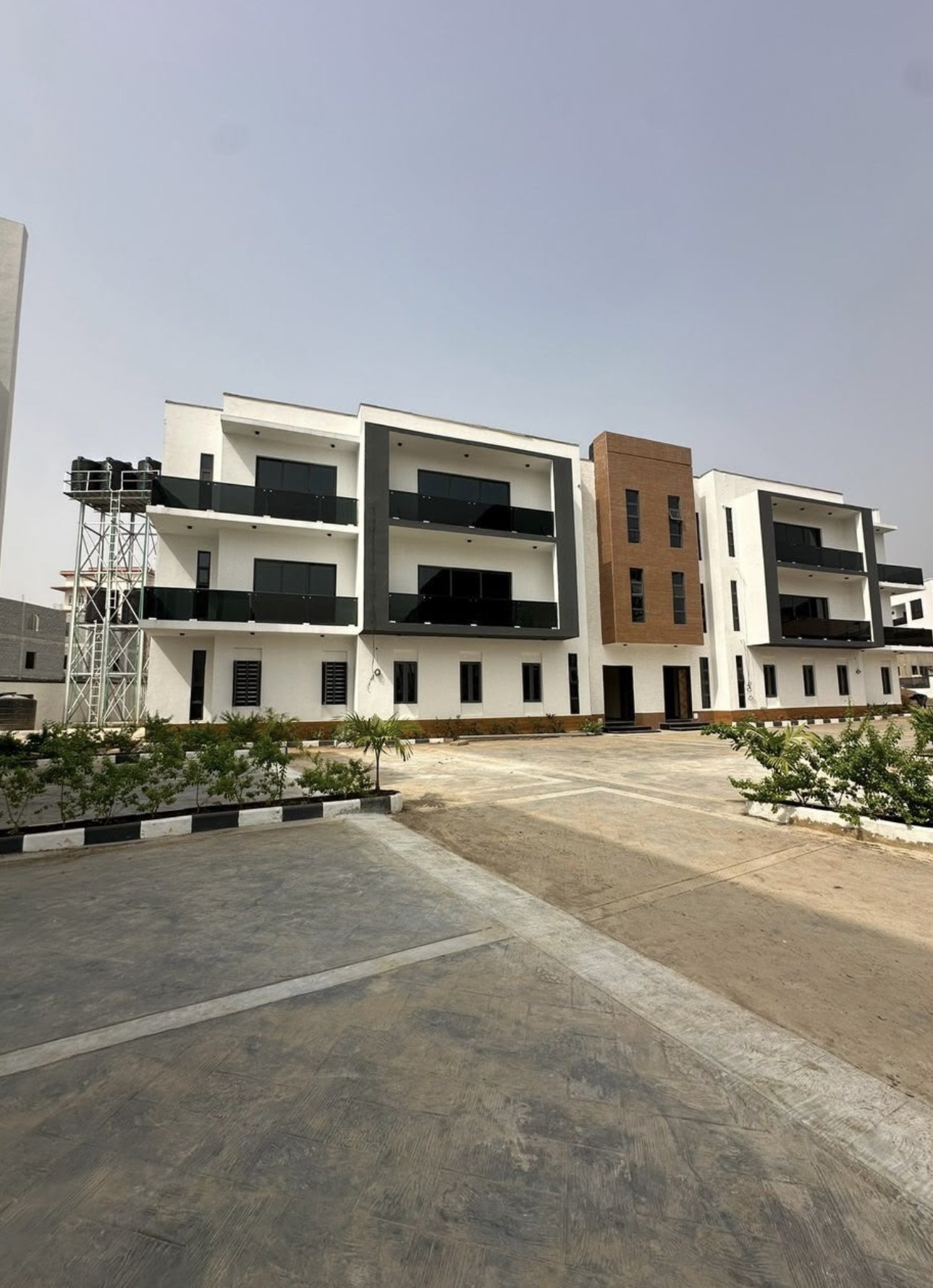
Off-plan property is essentially property purchased before construction has been completed, and sometimes before significant construction has even begun.
Instead of buying a finished apartment or house, you are buying into a development based on things such as:
Architectural plans.
Proposed specifications.
Location.
Developer track record.
Development agreements.
Construction programme.
Payment structure.
Expected completion.
The attraction is obvious.
You may be able to enter the development at an earlier price than someone purchasing a similar completed unit later.
But this is where investors need to understand something important:
The opportunity comes from understanding why the property may appreciate and whether the underlying assumptions are realistic.

How Can You Gain Equity Before Completion?
Let's imagine a developer launches a new apartment development.
An apartment is offered at:
₦100 million during the early stage.
You purchase at that price.
As construction progresses, several things may happen.
The development becomes more visible. Infrastructure around the location improves. More buyers enter the project. Construction reduces the perceived risk of the development. The developer increases the selling price for subsequent buyers. Demand for the location increases.
And suddenly, the same type of unit may be offered at:
₦120 million or ₦130 million.
You haven't necessarily done anything differently.
You simply entered the investment earlier.
That ₦20 million–₦30 million difference represents potential unrealised equity or capital appreciation in the property.
But there is an important distinction:
The increase in asking price is not automatically the same thing as guaranteed profit.
Your property is only truly worth what the market is willing to pay for it.
That is why investors should look beyond the developer's new price list and examine actual comparable properties, demand and the conditions of the market.
Why Would a Developer Increase the Price During Construction?
There are several reasons.
As a development progresses, the risk associated with an unfinished project can reduce.
Early buyers may be taking greater construction and delivery risk.
Later buyers are purchasing something closer to completion.
The developer may therefore progressively increase prices as:
This is one of the mechanisms that can create an opportunity for early investors.
And it is why you sometimes see properties launched at one price and progressively repriced as construction moves forward.
But Here Is Where Investors Get It Wrong
People hear:
And suddenly every off-plan development starts looking like an investment opportunity.
It isn't.
Buying off-plan does not guarantee appreciation.
A property can remain at the same value. It can appreciate more slowly than expected. Construction can be delayed. Market conditions can change. The developer can encounter difficulties. Demand can be weaker than anticipated.
And in some situations, a buyer may discover that the original purchase price was not particularly attractive compared with other properties in the market.
So the question should never simply be:
“How much cheaper is this off-plan property?”
The better question is:
“Why should this property be worth more when it is completed?”
What I Look For Before Considering an Off-Plan Investment
1. The Location
A beautiful development in the wrong location is still a difficult investment.
I want to understand the neighbourhood, accessibility, infrastructure, surrounding developments and the direction in which the area is moving.
2. The Developer
This is one of the most important factors.
Look at the developer's history. What have they delivered? Did they complete previous projects? Were the projects delivered close to the promised specifications? How long did they take? What do previous buyers say?
A developer's track record matters because with off-plan property, you are buying into a promise of future delivery.
3. The Entry Price
This is where the potential equity story begins.
If the completed market value of comparable properties is already around ₦120 million and someone is offering you an “off-plan opportunity” at ₦115 million, the discount may not be particularly compelling.
But if the fundamentals support a ₦130 million–₦140 million completed value and you are entering significantly below that level, the proposition becomes more interesting.
The numbers have to make sense before the story does.
4. The Payment Plan
One of the biggest advantages of some off-plan developments is the ability to spread payments over the construction period.
Instead of paying the entire purchase price immediately, a buyer may be able to make structured payments.
This can make property acquisition more accessible and, depending on the terms and price movement, potentially allow the investor to build value while completing the payment.
But always read the payment terms carefully.
5. The Documentation
Never allow the excitement of a discounted off-plan price to make you ignore documentation.
Understand exactly what you are purchasing, who owns or controls the underlying interest, what agreement you are signing, what rights you have as a buyer and what happens if the project is delayed or materially changed.
For significant transactions, independent legal advice is worth the cost.

There Is Another Layer People Often Miss
Off-plan investing isn't only about the difference between the purchase price and the eventual selling price.
There is also the possibility of using time strategically.
Imagine an investor who enters a project at an early stage with a structured payment plan.
Over the next 18 months:
Construction progresses.
The surrounding area develops.
The developer's later-stage prices increase.
The investor continues making scheduled payments.
By completion, the investor may have acquired an asset at a lower entry point than someone buying an equivalent unit at the later stage.
That is where the concept of building equity during the construction period becomes particularly interesting.
You are not simply waiting for a house to be completed.
You are potentially watching your position in the asset change as the project moves from concept → construction → completion.
The Lesson I Keep Coming Back To
What I appreciated about the conversation with Sir OJ was that it shifted my thinking away from simply asking:
and towards:
That is an important distinction for anyone who wants to move beyond simply owning property and start thinking more seriously about property investment.
Sir OJ's background as a lawyer and entrepreneur also makes the perspective particularly valuable to me because real estate isn't only about the physical building.
It is about structure, timing, risk, documentation, market demand and ultimately value.
His public profile identifies him as the founder of Solohan & Co and the Solohan Foundation, and public reporting has described his work across law, entrepreneurship and leadership. He was inducted as an AU Agenda 2063 Ambassador in 2024. View Sir OJ's LinkedIn profile →
So, Sir OJ, if you're reading this:
Thank you for that conversation.
Some lessons stay with you long after the conversation ends.
So, Should You Buy Off-Plan?
There is no universal yes or no.
I would consider off-plan when:
The location is strong.
The developer has a credible delivery history.
The entry price makes sense against comparable properties.
The payment structure is manageable.
The documentation has been properly reviewed.
There is a realistic reason to believe demand and value can grow.
If those factors are missing, the fact that something is “off-plan” does not make it a good investment.
The Bigger Picture
Real estate investing rewards people who learn to think beyond the finished building.
Sometimes the biggest opportunity isn't standing in front of a completed house.
Sometimes it is sitting inside a development that is still taking shape.
But the goal should never be to buy simply because someone tells you:
The goal is to understand why it could increase, what could prevent it from increasing and whether you are being compensated for the risks you are taking.
That, to me, is the real conversation around off-plan property.
Buy early when the fundamentals justify it.
Understand the risk.
Know your numbers.
And never confuse a projected future value with guaranteed profit.

MARGIN
What readers are saying

Public references consulted for Sir OJ Wada: The Nation and LinkedIn. This article is for educational purposes and does not guarantee property appreciation or investment returns. Buyers should conduct independent legal, financial and property due diligence.
Held Olive Realty Ltd.
Real estate, considered personally.
← Read MARGIN Issue 003Read MARGIN Issue 002 →
Back to MARGIN →
Speak with Held Olive Realty →