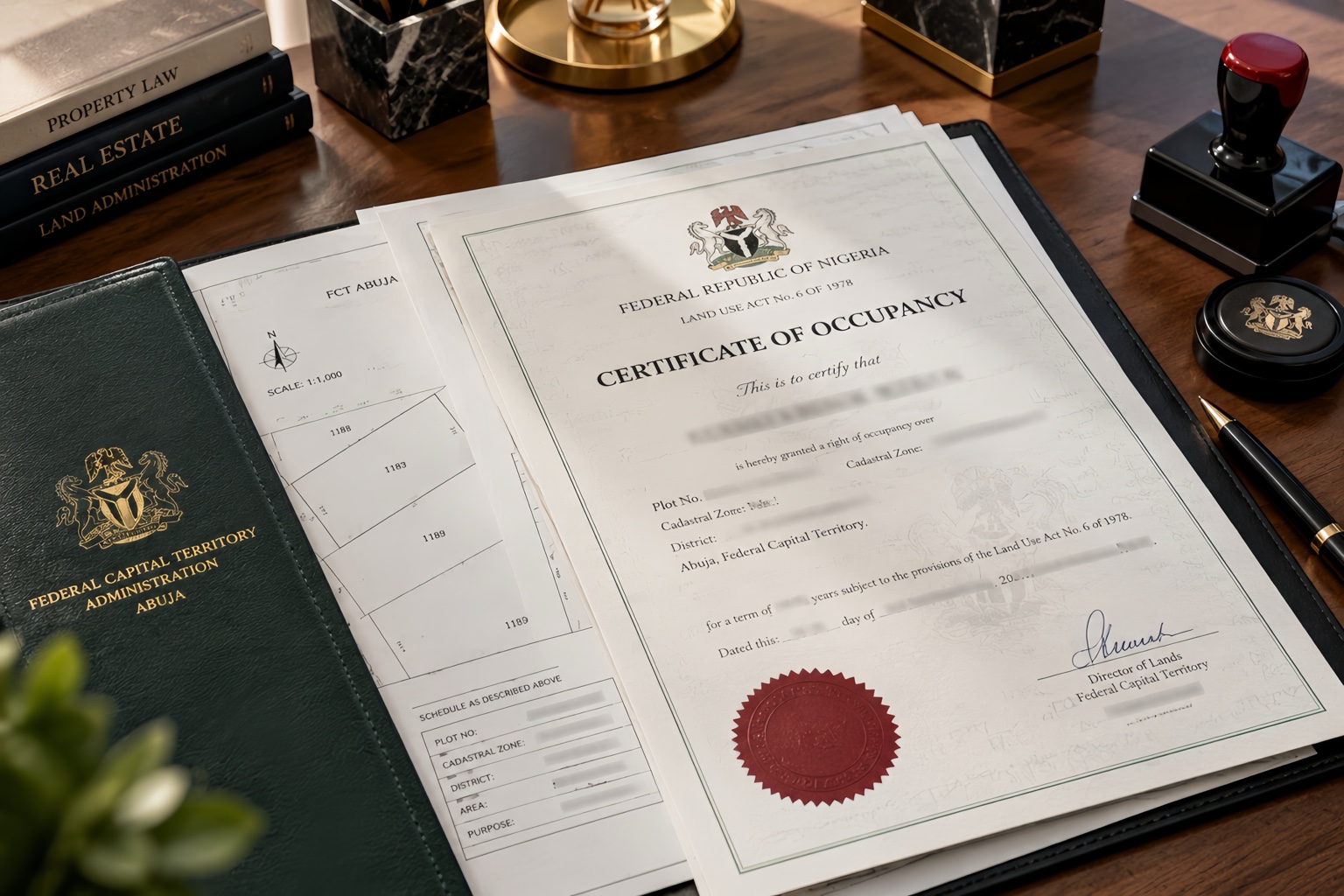
The document was sitting there looking exactly as a property document is supposed to look.
Official letterhead. Names. Dates. Signatures. Stamps. Enough detail to make you feel that somebody, somewhere, had already done the serious work.
This is usually the point at which a buyer relaxes.
And I understand why.
Buying property in Nigeria can make even a reasonably trusting person develop a healthy suspicion of paperwork. You ask for documents because you want to know that the property exists in the form you are being told it does, that the person selling has something legitimate to sell and that you are not about to transfer a very large amount of money into a problem.
So when the document arrives and looks right, there is relief.
Sometimes the buyer is even mentally moving on to the next part of the purchase: negotiating the final price, arranging payment, thinking about furniture, calling family members, imagining what the house will look like once it belongs to them.
I think property buyers sometimes give documents a job they cannot possibly do. We want the paper to tell us that the property is legitimate, the seller is authorised, there are no other complications, the transaction is safe and, somehow, that we have made a good investment.

One document cannot carry all of that.
A C of O can be genuine. A deed can be genuine. A survey can be genuine. The fact that a document is authentic does not mean every question surrounding the property has now been answered.
That sounds obvious when you say it plainly.
In an actual transaction, it is surprisingly easy to forget.
I have watched the way the mood around a property changes once the paperwork looks reassuring. Before the documents arrive, everyone is asking questions. After they arrive, the buyer can become noticeably more comfortable, sometimes to the point where further questions start to feel unnecessary.
That is where I become uncomfortable.
Not because I think the document is worthless. Quite the opposite. I want the documents. I want them properly examined. I want the appropriate searches done and the relevant professionals involved.
I just want us to be clear about what we are actually checking.
Suppose the document establishes that a particular interest in the property belongs to a particular person. Good.
We still need to understand whether that person has the authority required for the transaction we are contemplating.
Suppose the document is genuine. Good.
We still need to understand the property's history and whether there are other interests or circumstances that matter.

Suppose everything in the file is legitimate. Good.
We still have to ask whether the property itself works for what the buyer intends to do with it.
That last part is where property becomes much more interesting than paperwork.
A person buying a house in Abuja to live in is making a different decision from someone buying the same house because they expect rental income. Someone buying land to develop is making a different decision again. A buyer who expects to resell in five years has another set of concerns.
The documents matter to all of them.
They are not the only thing that matters.
There is also something psychological happening by the time the documents arrive.
People become attached to property very quickly.
I have seen how a viewing can change the conversation. A buyer walks into a house that has the right light, the right kitchen, enough parking and a neighbourhood they already like, and suddenly the conversation stops being entirely about whether the property makes sense.
It becomes about how they can make it theirs.
This is perfectly human.
You start picturing the sofa before you have finished checking the title.

You tell your sister about the house.
You start calculating what you would spend on the kitchen even though you have not paid for the property.
None of this means the buyer is foolish. It means they are no longer looking at the property as a neutral object.
They want it.
Once that happens, reassurance becomes very attractive.
A genuine-looking document can provide exactly that.
It can give you the feeling that the last difficult question has been answered.
But the more useful question is often what the document has not answered.
Who exactly has the authority to sell?
What interest is actually being transferred?
What does the title establish?
What else needs to be checked outside the title?

Does the physical property correspond with the documentation and the transaction being presented?
Those questions are less satisfying because they do not usually produce one clean sentence.
Property rarely does.
This is also why I don't think due diligence should be treated as an exercise in trying to catch a dishonest seller.
A seller can be perfectly genuine and still not have the complete picture.
Someone can honestly believe they have explained everything and still leave something important unexplored. A property can have a legitimate history and still have an issue that matters to the particular buyer. A person can have authority over an interest in a property without that automatically answering every question about what the buyer intends to do with it.
You do not need a villain for a property transaction to become complicated.
That is one reason I am wary when someone says, “The owner is a very trustworthy person.”
I hope so.
But I would still check.
Trust is useful in a relationship. It is not a substitute for verification when a significant amount of money is changing hands.
The same thing applies to urgency.
There are properties that genuinely have competing buyers. There are sellers who genuinely need to close quickly. There are transactions where waiting too long can mean losing the property.
But none of those things make an unanswered question less important.
If anything, urgency is when I want people to be more deliberate.
This is where I sometimes disagree with the idea that a buyer should move quickly because “a property like this won't wait.”
Maybe it won't.
I would rather lose a property than allow someone else's urgency to become the reason I stopped asking questions.
There is a cost to taking time, of course. You might lose the house. The seller might become irritated. Another buyer might make an offer.
There is also a cost to not taking time.
And the second cost is usually much less pleasant.
This is why, if I am looking at a property where a significant amount of money is involved, I would rather have an uncomfortable conversation before payment than a very polite conversation after payment.
Professional due diligence may slow things down. That is sometimes the point.
The exact checks and professional fees will depend on the property, the title, the transaction and the questions that need to be answered. I would not give a buyer one blanket figure and pretend every property requires the same process.
But I would be very reluctant to advise someone to save money by skipping the work that protects the money they are about to spend.
The irony is that good due diligence does not always uncover something terrible.
Sometimes everything checks out.
That is a good result.
Sometimes the investigation simply gives you a clearer understanding of what you are buying and allows you to proceed without having to rely on optimism.
I actually prefer that kind of reassurance.
It is earned.
There is another question I think buyers should ask themselves, especially when they are buying property as an investment.
Even if the documentation is clean, why are you buying this particular property?
A legitimate apartment can still be a poor rental investment.
A properly documented house can still be expensive to maintain.
A perfectly legitimate property can still be difficult to resell.

A piece of land can have proper documentation and still not suit the development you have in mind.
None of these make the documentation false.
They simply belong to a different part of the decision.
This is where I think buyers sometimes separate questions that should be considered together.
They ask, “Is this property legitimate?”
Then, once they are satisfied, they ask whether it is a good investment.
Then they think about whether they can afford it.
Then, much later, they discover that these were never completely separate decisions.
If you are spending ₦250 million on a property, for example, you are not only buying a title.
You are committing yourself to the property itself: its location, condition, running costs, market demand, intended use and eventual exit.
The paperwork is part of that commitment.
It is not the whole thing.

And this is particularly relevant in a market like Abuja, where the same word can mean very different things depending on the property and the transaction.
“Documented.”
“Approved.”
“Serviced.”
“Good investment.”
“Prime location.”
These phrases can sound reassuring while leaving a surprising amount unsaid.
I don't dislike the phrases themselves. I dislike what happens when we stop asking what they mean in the particular transaction.
A property being in a desirable part of Abuja does not automatically make it a good purchase.
A property having documentation does not automatically make it suitable for your purpose.
A seller sounding confident does not automatically make the transaction safe.
You have to keep bringing the conversation back to the actual property.
What are you buying?
Who has the authority to sell it?
What does the documentation establish?
What remains outside the documentation?
And, after all of that, does this property still make sense for you?
Those questions do not make property less exciting.
They simply make the excitement more expensive to ignore.
I think that is what bothers me most about the way we sometimes talk about property documents. We treat the document as though its job is to remove uncertainty completely.
It cannot.
Property is too messy for that.
People sell. People inherit. Interests change hands. Buildings are altered. Land is developed. Families disagree. Businesses change plans. Markets move. Buyers change their minds. Documents record parts of these things, but they do not become the entire history simply because they have official stamps on them.
So yes, I want to see the document.
I want it checked.
I want to know exactly what it establishes.
Then I want to keep asking questions.
The document on the table may be genuine. It may be perfectly legitimate. It may be one of the reasons you should feel more comfortable about the transaction.
But if you look at it and think, Good, we're safe now, I would probably ask you to leave it on the table for another minute.
There may still be something you need to know.